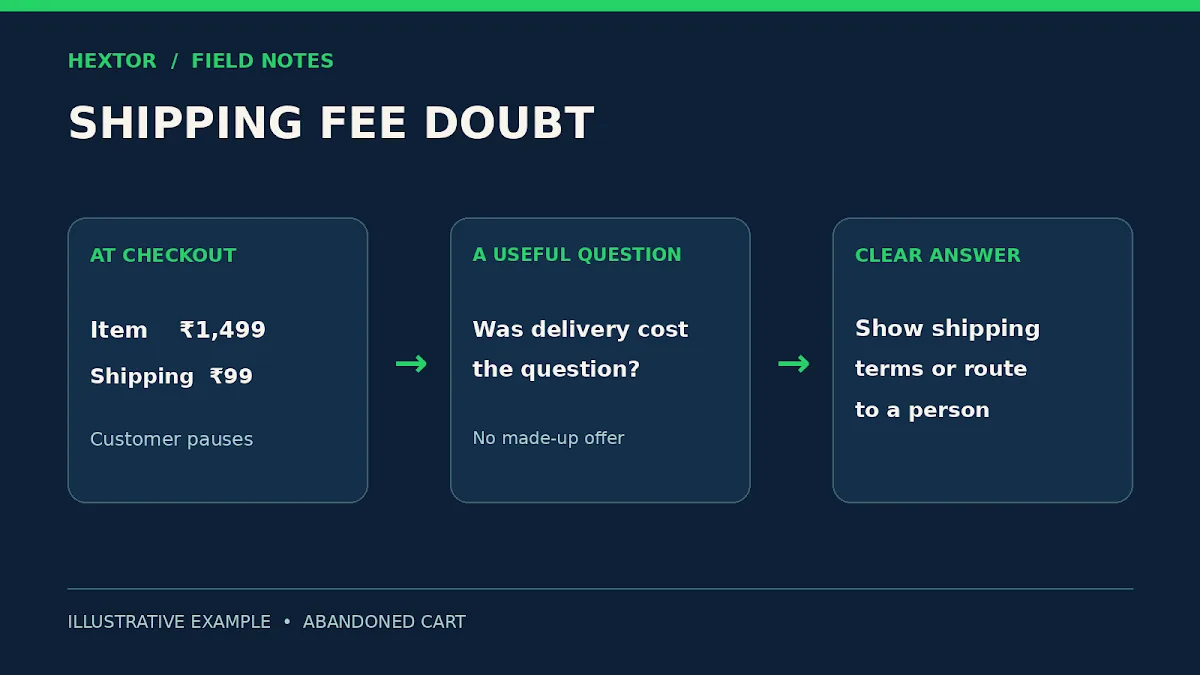
A shopper may be comfortable with a ₹1,499 product until checkout shows a ₹99 shipping fee. If they leave at that point, a generic “You forgot your cart” reminder answers none of the questions that stopped them. But an abandoned checkout alone does not prove the fee was the reason: they could have been interrupted or still comparing options.
Find the doubt without pretending to know it
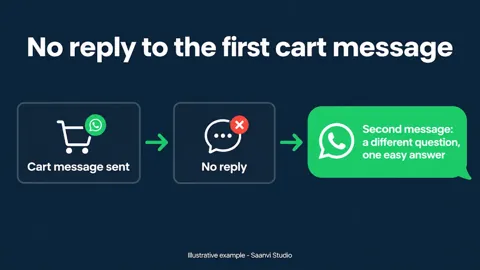
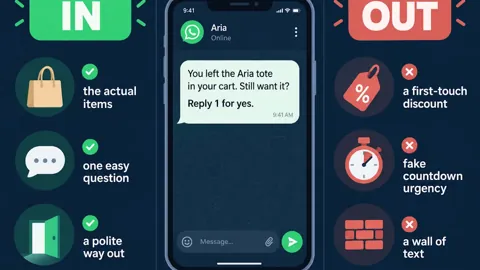
A useful cart follow-up opens a conversation, not a hidden discount promise. The message can identify the items left behind and invite a question about delivery or the order total. It should not claim to know why the shopper left, call a fee “waived” unless the store actually waived it, or invent a countdown. The first abandoned-cart message note explains why the actual cart items, one easy question and a polite way out matter more than a loud offer.
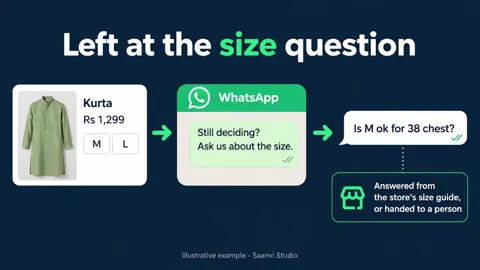
Shipping answers need the store’s real policy and the customer’s actual destination. A fee may depend on a pin code, cart value or delivery speed. If a support answer cannot be checked against those rules, the conversation should reach a person rather than present a made-up certainty.
A sample conversation at the fee step
Suppose Saanvi Studio’s illustrative checkout shows a tote at ₹1,499 and ₹99 shipping. The customer leaves before placing the order. A suitable follow-up, if they opted in, could say: “Hi Priya, the Aria tote is still in your Saanvi Studio cart. Was there a delivery-cost question, or something else we can clear up? Reply here, or ignore this and we’ll stop.” The message does not assert that the fee caused the exit; it gives the customer a way to say what did.
If Priya asks why shipping costs ₹99, the answer must reflect Saanvi Studio’s actual delivery policy for that address. If a free-shipping threshold or prepaid option exists, use it only when the current store rules cover this order. Never let a cart-recovery flow create a promise the checkout will contradict. The follow-up timing note also makes a stop rule part of the flow, so the customer is not chased after buying or declining.
What Hextor builds behind the reply
Hextor Labs’ cart-recovery flow sends a WhatsApp after a delay the store chooses, in its voice, with the items still in the cart. A question can go to an AI agent using live product and order data, with a handoff to a person when the answer is uncertain. That lets the store deal with a shipping concern as a question, while keeping the current checkout and store policy as the source of truth.
To see how your store could answer delivery-cost questions without improvised offers, tap the “Ask anything” WhatsApp button. Tell Hextor where shoppers pause and what your shipping rules actually say.
Sources and scope: Hextor Labs’ cart-recovery flow overview and Meta’s WhatsApp opt-in guidance. Saanvi Studio, Priya, the tote and both prices are illustrative, not a client result or Hextor offer. Customer WhatsApp outreach requires appropriate opt-in.