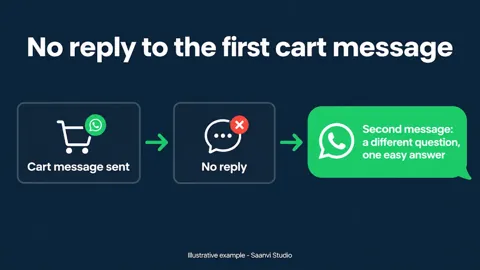
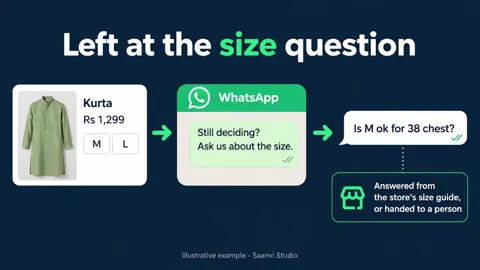
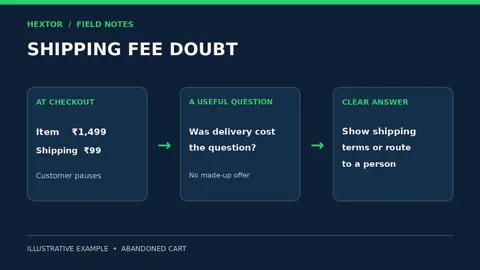
An abandoned-cart sequence is easy to start and hard to end. One reminder becomes two, then three, and nobody decides when to stop. A customer who gets a fourth message about a cart they chose to leave does not feel looked after. They feel followed.
A limit is part of the design
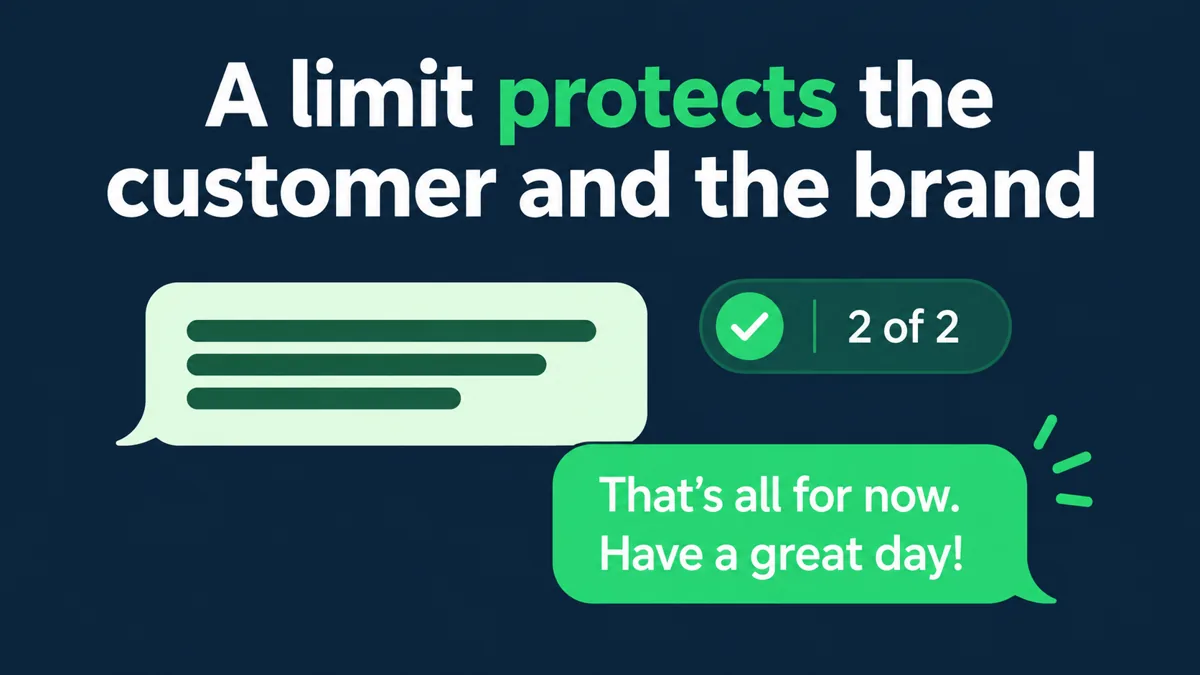
Decide the last message before you send the first. Whether that is two reminders or three is the store’s choice, but it should be a written rule and not a habit. The second message should ask something new, and the one after that should be the end.
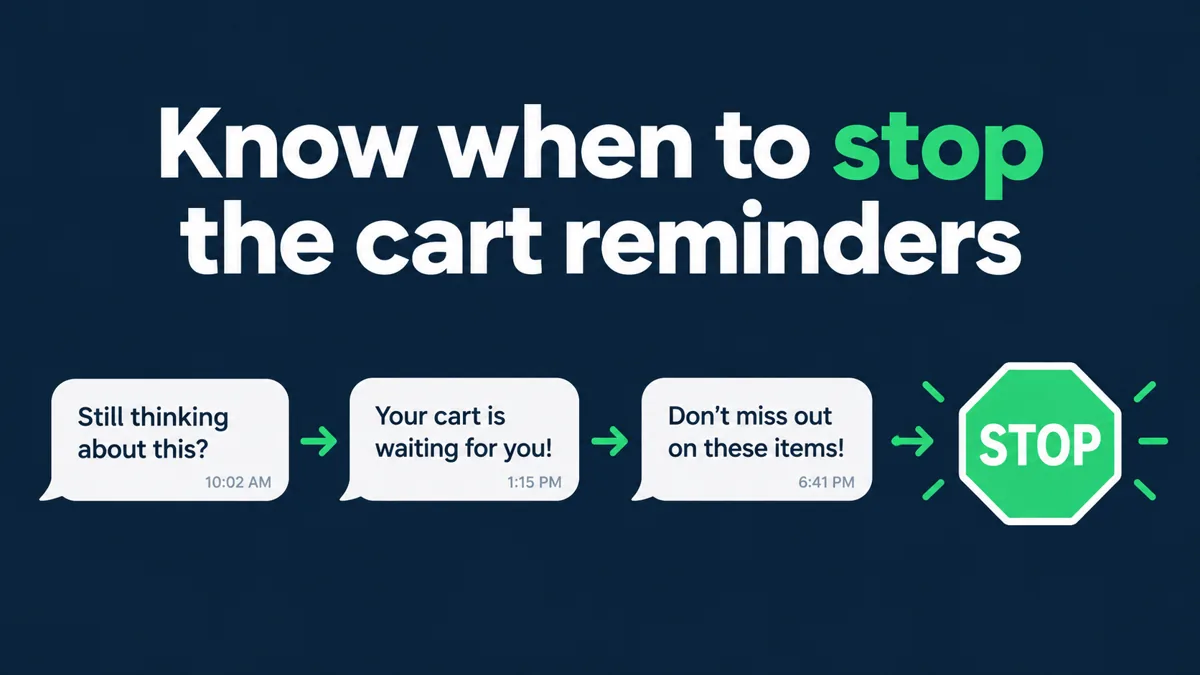
What a good last message does
Suppose Saanvi Studio’s illustrative customer Priya has not replied to two cart messages. If she opted in, the last one can say her cart is saved, that this is the final note, and how to reach the team if she has a question. A last message that closes the loop politely often leaves a better impression than another push. Keep it free of fake urgency, as the note on the first cart message explains.
Respect the stop signals
Stop at once if the customer replies, buys, or asks not to be contacted. A reply of any kind should hand the thread to a person or a helpful answer, not trigger the next scheduled reminder. The shipping-fee note shows how a specific reply deserves a specific answer.
What Hextor builds behind the limit
Hextor Labs’ cart recovery flow sends a WhatsApp after a delay the store chooses, in its voice, with the items still in the cart. Questions go to an AI agent using live product and order data, with a handoff to a person when unsure. It runs in the store’s own accounts.
To see how a reminder limit could work for your store, tap the “Ask anything” WhatsApp button. You can also book the free 30-minute audit.
Sources and scope: Hextor Labs flow overview and Meta’s WhatsApp opt-in guidance. Saanvi Studio, Priya and the order details are illustrative, not a client result or Hextor offer. Customer WhatsApp outreach requires appropriate opt-in.