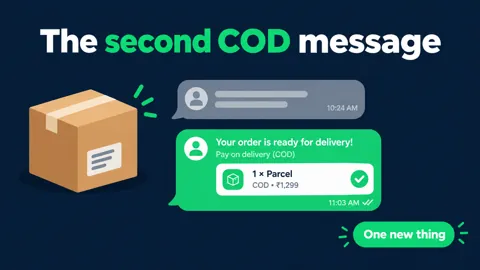
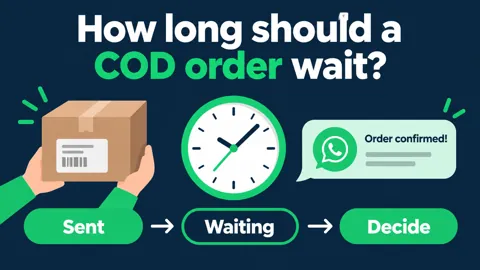
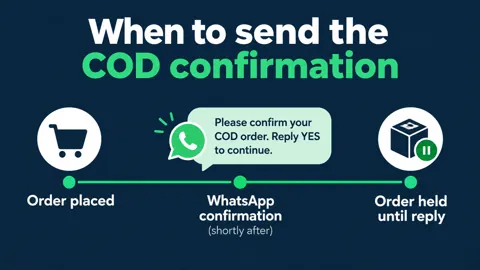
The COD order is still silent after the confirmation and its follow-up. Your team has a parcel to pack, stock to hold and no clear answer from the buyer. Shipping because nobody objected is a gamble. Cancelling because the inbox is quiet can lose a genuine order. The useful question is which decision the evidence supports.
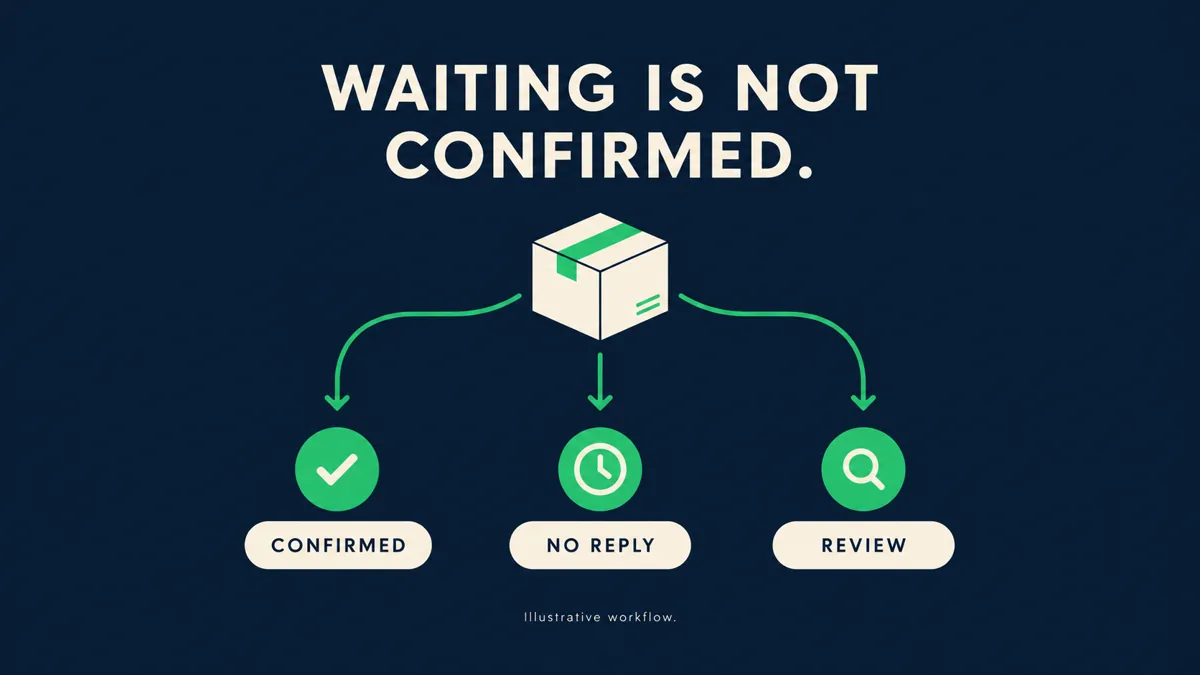
No reply is a status, not a customer decision
A quiet conversation does not tell you why the customer has not answered. They may be busy, may have missed the message or may no longer want the order. Treat those possibilities as unknown until there is an answer. The note on what counts as a confirmed COD order explains why silence should not be recorded as consent.
Keep three states separate: waiting for a reply, waiting for a person to review, and closed under the store's rule. A queue that says only "pending" hides the next owner and encourages the packing team to make its own decision.
Keep waiting when there is a reason and a limit
An agreed callback, a customer asking for time or an unresolved order-change request can justify a longer wait. An order should not receive extra time just because nobody wants to close it. The waiting window needs an end point, an owner and a stock rule chosen by the store.
The reply-window article covers that earlier stage. At the end of the window, review what is still unresolved: was the message delivered, did the customer ask a question, and is the promised shipping timing still realistic? A failed message belongs in a delivery or contact review, not in the same bucket as an answered cancellation.
Close the order under a clear store rule
If the agreed follow-up window has ended with no answer and no reason for an exception, closing an unconfirmed order may be the store's chosen outcome. That decision should release stock according to the store's process and leave a clear record of why the order was closed. Do not claim the customer cancelled when they did not say so.
A late reply creates a new check, not an automatic shipment. The team needs to confirm that the items, price and dispatch expectations still apply. If the original order cannot proceed, explain that plainly before offering another route.
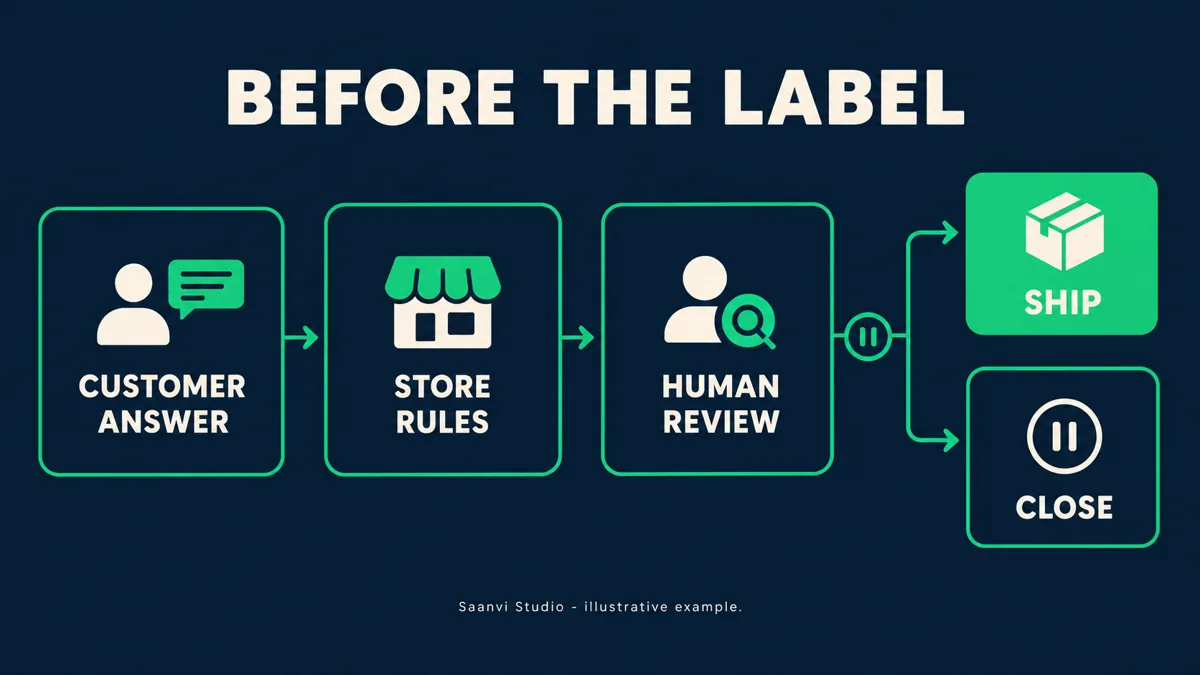
Saanvi Studio: a review instead of a guess
In this fictional example, Priya's COD order reaches Saanvi Studio's waiting deadline. She has not confirmed, but an earlier reply asked about changing the size. The team reviews that unresolved question rather than closing the order as unwanted. Another silent order with no open question follows the store's closure rule. Neither is sent to packing merely because a timer ended.
A better second confirmation message can make the requested answer clearer. It still cannot turn silence into a yes.
What Hextor builds around the decision
Hextor builds WhatsApp COD confirmation flows for Shopify stores, with confirmation before the label is printed and routing based on the customer's answer. No reply after the store's chosen follow-ups holds the order rather than shipping it. The store's closure and exception rules can be discussed during the audit, with human review where an answer needs judgment. The flow runs in the store's own accounts.
Tap the "Ask anything" WhatsApp button and tell us where your team gets stuck. Start with a free 30-minute audit to discuss what the flow would need to handle in your Shopify store.
Sources and scope: Hextor Labs for the Shopify flow overview; Meta WhatsApp opt-in guidance for messaging permission. Obtain appropriate opt-in, set expectations and honor opt-outs. Saanvi Studio and Priya are fictional illustrations, not customers, testimonials or measured results. These are operational considerations, not guaranteed outcomes.