A shopper leaves a full cart and your team debates the next message. Someone suggests a discount to bring them back. Someone else worries that customers will learn to abandon carts on purpose. Both concerns are reasonable. The better question is why the cart stopped, because the answer decides whether an offer is relevant at all.
Start from the reason, not the coupon
People leave carts for different reasons: a size doubt, an unexpected shipping fee, a payment problem or a distraction. A coupon only addresses one of them, and only in some cases. If the real problem is a missing answer, a price cut does not fix it. Look at what the store can tell from the cart and from any reply before choosing the message.
The first-message article covers what to say before any offer appears. The size-question article shows a case where an answer works better than an incentive.

A simple rule for when an offer fits
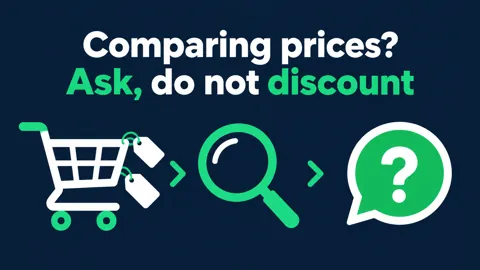
Consider an offer only after a plain reminder and an answer have not moved the cart, and only when price is the stated or likely reason. Keep the offer limited, explain its conditions and decide in advance who is eligible. Avoid making it the default first message, because customers may learn to wait.
Do not invent scarcity or a deadline that is not real. If the store cannot honor the offer, do not send it.
Let the customer's reply choose the path
The shipping-fee article describes a customer who paused on cost for a specific reason. That customer may need a clear explanation or a person's decision, not an automatic coupon. Route price questions to someone with authority to say yes or no, rather than letting the message promise something the team has not approved.

Saanvi Studio: reminder first, offer by decision
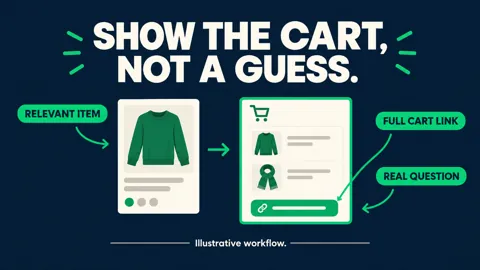
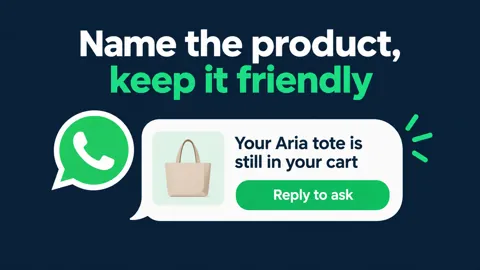
In this fictional example, Priya leaves a cart at Saanvi Studio. The first message is a reminder with a return-to-cart link and an invitation to ask a question. She replies that the total feels high. The reply goes to a team member, who can decide whether a limited offer fits that cart. Another shopper who did not mention price gets no offer. The store also keeps in mind the point where reminders should stop.
What Hextor builds around the choice
Hextor builds Shopify cart recovery flows that follow up after a store-chosen delay, in the store's voice. Questions go to an AI agent using live product and order data, with a person taking over when it is unsure. During the audit, you can decide when an offer is allowed, who approves it and what the flow should never promise. The store sets the rule and Hextor builds it.
Tap the "Ask anything" WhatsApp button and tell us where your team gets stuck. Start with a free 30-minute audit to discuss what the flow would need to handle in your Shopify store.
Sources and scope: Hextor Labs for the Shopify flow overview; Meta WhatsApp opt-in guidance for messaging permission. Obtain appropriate opt-in, set expectations and honor opt-outs. Saanvi Studio and Priya are fictional illustrations, not customers, testimonials or measured results. These are operational considerations, not guaranteed outcomes.